AI copilots can answer questions.
Workato’s newly launched Otto is designed to actually finish the work.
Otto by Workato is an AI teammate: it doesn’t just surface insights, it quietly pushes work to the finish line across your enterprise stack while staying fully under IT’s control. For Infoteck Solutions customers who already rely on Workato for orchestration, Otto is the natural next step in taking “agentic” automation from experiment to day‑to‑day execution.
Most “copilots” still depend on a person sitting in front of a screen, nudging prompts and clicking buttons. Otto is built for a different moment. Announced in May 2026, Workato positions it as a digital teammate that takes a goal, finds the right systems and people, and keeps going until the job is done – with approvals, audit trails, and guardrails baked in.
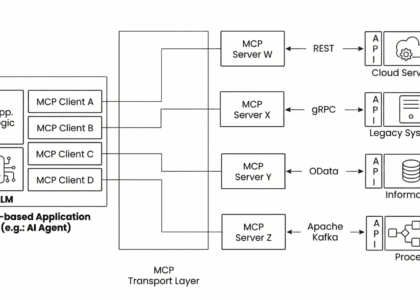
Instead of living inside a single app, Otto sits on top of Workato’s Enterprise Model Context Protocol (MCP) layer, which already connects to thousands of enterprise systems. That means it starts with deep reach into your existing workflows and data, not a blank slate that needs custom plumbing.
Otto arrives at a time when many organizations are stuck in what Workato calls the “AI agent trap”: powerful but risky tools on one side, and safe but siloed bots on the other. Otto’s design is very deliberate about escaping that trap
Key characteristics that stand out
- It runs continuously in the cloud, so work can progress overnight instead of waiting for someone to open a laptop.
- It acts through the same Workato MCP connections you already use, so there’s no new round of integrations, security reviews, or one‑off agents to maintain.
- It behaves like a teammate in Slack or Microsoft Teams, joining channels, chasing actions, and escalating decisions instead of waiting passively for prompts.
- Every action is governed by the same policies, roles, and audit trails that IT already enforces through Workato’s platform.
For enterprises that have been wary of “shadow agents” calling APIs directly, that last point is critical.
Built on Enterprise MCP, not glue code
Under the hood, Otto relies on Workato Enterprise MCP – a control and action plane that turns your existing workflows, integrations, and APIs into governed “skills” that agents can call safely. MCP servers wrap access control, identity, and observability around those skills, so an agent like Otto never talks to raw endpoints; it talks to curated capabilities with clear boundaries.
Because MCP is agent‑agnostic, it already connects to popular LLM agents like Claude, ChatGPT, Gemini, and others. Otto builds on that same foundation but is purpose‑built as an enterprise teammate that lives inside your environment, not as an external gadget bolted on later.
For teams that have invested in Workato recipes and connectors, this is a major advantage. You’re not rebuilding integration logic for agents; you’re giving Otto access to skills the business already trusts.
How Otto shows up in daily work
Workato highlights Otto through very concrete scenarios that will resonate with any operations or IT leader. A few stand‑out patterns:
Sales and customer success
Otto can watch product usage signals, CRM data, and call intelligence tools such as Gong. When it spots a worrying drop on a high‑value account, it assembles the relevant information, surfaces risk to the account team, and nudges CSMs and AEs into a coordinated plan before the week even starts.
Support operations
After a problematic release, Otto can triage a flood of support tickets, resolve the straightforward ones, and highlight the subset that truly needs human attention – with full context, links, and an audit trail ready for the support lead.
Finance and quarter‑end
Instead of spreadsheets passed around at midnight, Otto can scan open purchase orders across tools like Coupa and NetSuite, flag discrepancies, route missing approvals, and queue up key decisions for the CFO.
HR onboarding
When dozens of new employees start on the same day, Otto can coordinate provisioning, access, and first‑day context across systems so people arrive with what they need to be productive from hour one.
IT and compliance
When an audit request lands, Otto can gather access logs and activity across systems, compile them into a coherent package, and route them to the right stakeholders before the IT team even starts manual digging.
These use cases share a common pattern: Otto doesn’t replace human judgment on the critical decisions, but it does the heavy lifting of coordination, data gathering, and follow‑through.
Collaboration without turning everyone into a project manager
Many automation initiatives falter not because the system work is hard, but because the people work is hard. Otto is intentionally designed to live where teams already talk – in Slack, Microsoft Teams, and the applications they use every day.
Otto can:
- Join relevant channels and group messages, keep track of open items, and remind owners when work stalls.
- Pull context from multiple systems into a single threaded conversation so decisions happen with full visibility.
- Escalate items that genuinely need human input, instead of spamming teams with low‑value alerts.
The result is a digital teammate that quietly keeps projects moving without turning every stakeholder into a part‑time project manager.
Governance as a first‑class feature
For CIOs and CISOs, the most important part of Otto is not what it can do, but how it does it. Workato is explicit that Otto operates entirely within the existing governance framework of Workato Enterprise MCP and its orchestration platform.
That includes:
- Role‑based access controls and unified identity, so Otto can only do what an appropriately scoped human could do.
- Full logging and audit trails for every action, from data reads to approvals to escalations.
- Isolation of credentials from the language model itself, reducing the risk of secrets leaking via prompts or model logs.
Industry leaders quoted in the launch emphasize this combination of autonomy and accountability as the real differentiator – especially in highly regulated sectors like healthcare.
Otto vs traditional AI copilots
| Traditional AI Copilots | Workato Otto |
|---|---|
| Wait for prompts | Operates continuously |
| Mostly assist users | Executes workflows |
| Limited to one application | Works across enterprise systems |
| Require manual follow-up | Tracks actions automatically |
| Provide suggestions | Coordinates operational tasks |
| Often disconnected from governance | Built with enterprise controls |
Why this matters for Infoteck Solutions customers
For organizations in India and beyond that already see Workato as the backbone of their integration and automation strategy, Otto is more than a new product name. It’s a signal of where the Workato ecosystem is heading: toward agentic orchestration where humans set goals, and governed digital teammates handle the grind work across systems, data, and teams.
Because Otto rides on top of Enterprise MCP and existing Workato connections, early adopters can focus on defining high‑value goals and guardrails rather than rebuilding integrations from scratch. The investments you have already made in recipes, connectors, and governance become building blocks for this new class of autonomous teammate.
At Infoteck Solutions, that opens up concrete opportunities: reimagining sales playbooks around proactive account health, reducing support backlog during high‑pressure releases, tightening the link between finance workflows and compliance, and giving HR and IT a more reliable way to coordinate high‑volume events like hiring spikes.
Preparing your organization for Otto
Otto is currently in early access, with more than a thousand users already testing it across real‑world workflows as Workato moves toward general availability. Now is a good time to get ready internally so you can move fast when it becomes broadly accessible:
- Clean up data and ownership. Clear owners, well‑defined fields, and consistent processes make it easier for Otto to operate confidently across systems.
- Harden governance. Review roles, access policies, and audit requirements on your existing Workato setup; Otto will inherit those controls.
- Identify “finish‑line” use cases. Look for workflows where insights already exist but execution is slow – account risk, ticket backlogs, quarter‑end close, onboarding waves, and compliance tasks are strong candidates.
As Workato continues to evolve its agentic platform – from Enterprise MCP to the broader Workato ONE ecosystem – Otto represents the most visible expression of that strategy: a digital teammate designed for employees, governed by IT, and grounded in the enterprise controls you already rely on.
If you’d like support in mapping Otto to your existing Workato landscape and high‑value use cases, Infoteck Solutions can help you design an adoption roadmap that aligns with your governance standards and business priorities.